
Southwell Handicap Betting: Reading Weights on a Level Surface
 Available in US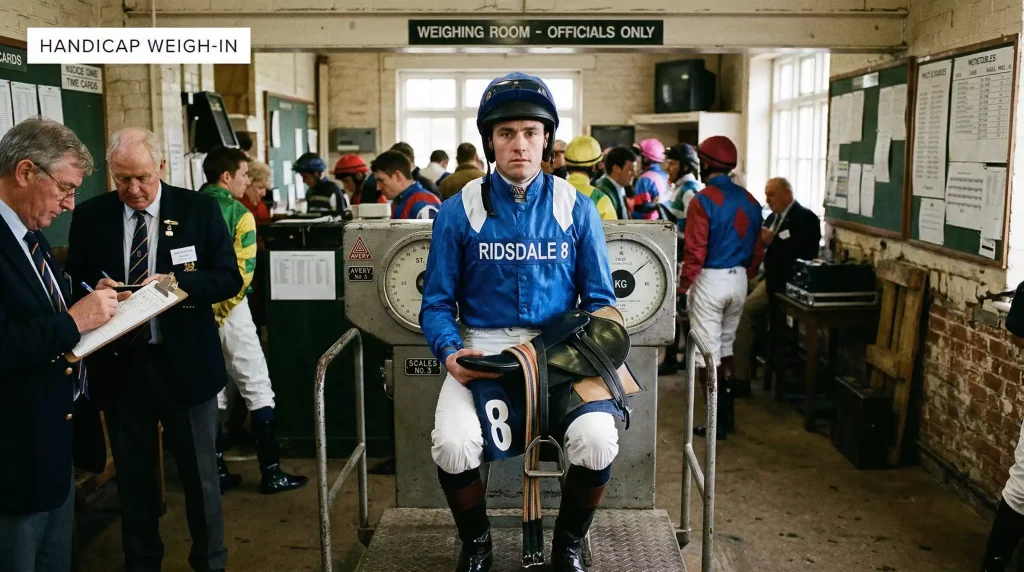
Southwell handicap betting makes up the largest slice of the all-weather programme at this Nottinghamshire course, and it is also the slice that separates serious punters from casual ones. Handicaps are designed to give every horse an equal chance by assigning weight based on ability, and when the system works as intended, the result is anyone’s guess. When it does not work perfectly — and it never does — that is where the value hides.
The all-weather flat programme at Southwell is dominated by Class 5 and Class 6 handicaps, with a regular scattering of Class 4 events. These are competitive races on a uniform Tapeta surface where the variables that distort turf handicaps — soft ground, undulating tracks, extreme draw biases — are minimised. What remains is a purer test of the handicapper’s art: are the weights right, and can you spot where they are wrong?
Southwell Handicap Betting — More on this topic at southwell betting.
How BHA Ratings Work in All-Weather Handicaps
Every horse in a British handicap race carries a weight determined by its Official Rating, assigned by the BHA handicapping team. The higher the rating, the more weight the horse carries. A horse rated 70 will carry more than one rated 55, and the weight differential is calculated at one pound per point of rating. The idea is that if the ratings are accurate, every horse crosses the line at the same time. In practice, they never do — which is the entire basis for handicap betting.
On the all-weather, ratings tend to be more stable than on turf because the surface conditions are consistent. A horse that runs at Southwell on Tapeta in January faces essentially the same racing surface as one running there in July. There is no equivalent of a horse whose turf form is transformed by a switch from firm to heavy ground. This consistency makes all-weather handicap ratings more reliable as a baseline, but it also means that dramatic rating changes — the kind that create obvious value — happen less frequently.
The key thing to watch is the trajectory. A horse whose rating has been dropping after a string of poor runs may be reaching a level where it becomes competitive again — the so-called “well-handicapped” horse. Conversely, a horse that has won recently and been raised several pounds may now be racing off a mark that eliminates its previous advantage. Both scenarios are more readable on the all-weather than on turf, precisely because the surface variable is held constant.
Class-Level Patterns: Where Handicaps Get Competitive
The distinction between race classes at Southwell is not academic — it drives field composition, market behaviour and the type of horse you encounter. According to the BHA Racing Report, average field sizes at Core flat fixtures fell to 8.65 in 2025, down from 8.93 the previous year. Southwell, as a Core venue, sits squarely in that band, and Class 5 and 6 handicaps tend to produce fields of 8 to 12 runners — competitive enough to be interesting, but not so large that the race becomes a lottery.
Class 6 handicaps are the lowest tier and feature horses rated roughly 0-55. These races are often dismissed as poor quality, but they offer specific advantages for the handicap bettor. The form tends to be extensive — most runners have had many starts, which gives you more data points to work with. The downside is consistency: horses at this level can produce wildly variable runs, making strict form analysis unreliable. The best approach in Class 6 is to look for horses dropping in class from a Class 5 race where they were competitive, or horses returning to a course and distance where they have previously run well.
Class 4 handicaps at Southwell draw a better standard of horse and occasionally attract runners from major yards testing their all-weather credentials. These races have the deepest form and the most reliable rating system, making them the most amenable to systematic handicapping. They also tend to attract more professional betting activity, which tightens the market and reduces the number of obvious value plays — but the trade-off is accuracy. When you find value in a Class 4 Southwell handicap, the edge tends to be genuine rather than illusory.
Spot the Well-Handicapped Horse
A well-handicapped horse is one whose current rating underestimates its true ability. This can happen for several reasons: a string of runs on an unsuitable surface, a period of poor health that has since been resolved, a change of trainer that brings new methods, or simply a horse that is improving faster than the handicapper is raising its mark.
At Southwell, the most common source of a well-handicapped runner is the surface switch. Horses that have been running on Polytrack at Kempton or Lingfield and arrive at Southwell for the first time on Tapeta may be carrying a rating that reflects their Polytrack form rather than their Tapeta potential. While the two synthetic surfaces are broadly similar, some horses move markedly better on one than the other. A horse whose Polytrack form is mediocre but whose breeding or running style suggests it will handle Tapeta can be genuinely overpriced in its first handicap at Southwell.
Equipment changes are another signal. A horse fitted with a first-time visor, tongue-tie or cheekpieces in a Southwell handicap is often a sign that the trainer is making a deliberate tactical move. These changes do not always work, but when they coincide with a drop in class or a return to a preferred distance, they can unlock improvement that the rating has not yet captured. Check the trainer’s record with equipment changes — some yards use them routinely and meaninglessly, while others deploy them sparingly and to good effect.
Handicap Tips Specific to the Southwell Tapeta
The Tapeta surface adds specific wrinkles to handicap betting that do not apply on turf. First, the reduced kickback compared to the old Fibresand means that hold-up horses can now compete effectively in handicaps at Southwell. On Fibresand, racing prominently was almost mandatory; on Tapeta, a horse that settles in midfield and picks off tiring leaders in the home straight has a genuine chance. This widens the pool of potential winners and makes pace analysis more important than it was in the pre-2021 era.
See also How to Bet at Southwell Racecourse.
Second, the flat configuration of the track and the uniform surface mean that weight tells more honestly than at undulating or variable-ground venues. A horse carrying 9st 7lb against one carrying 8st 7lb faces a genuine 14-pound disadvantage on flat, consistent ground — there is no hill to climb where a lighter horse might pull away, and no bog where a heavier horse might struggle more. This makes the weight-for-rating calculation cleaner at Southwell than at most turf courses, and it means you should take the handicapper’s assessment more seriously here than you might elsewhere.
The betting turnover data reinforces a broader point. Average turnover per race at Core fixtures declined by 8.1% year-on-year in 2025, reflecting thinner markets at venues like Southwell. In practical terms, this means handicap prices can be softer — particularly in the morning markets for midweek meetings. Bettors who do their analysis early and place bets before the market consolidates in the final hour can capture better prices than those who wait until post time. The market at Southwell handicaps rewards preparation more than reaction.
