
Southwell Betting: What the Data Says About Britain's Busiest All-Weather Track
 Available in US
Data-driven analysis for smarter all-weather bets.
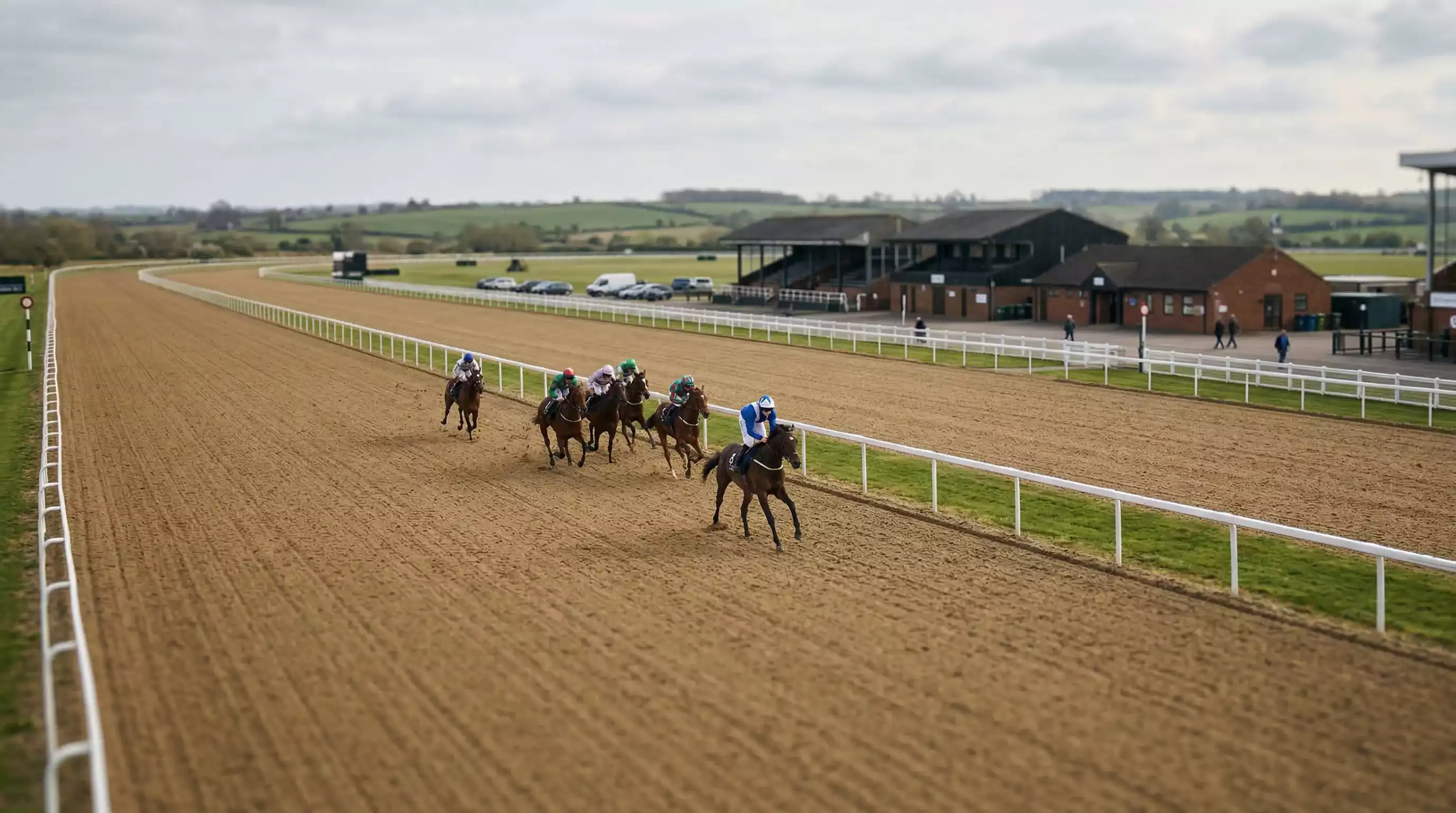
Southwell betting occupies a peculiar niche in British horse racing. The Nottinghamshire track hosts more fixtures than almost any other UK racecourse — 79 confirmed for 2026, according to the course's own announcement — yet it rarely features in mainstream racing coverage. That gap between volume and visibility creates something valuable for bettors willing to do the work: a market where data beats reputation, and where the casual punter's indifference is the informed punter's edge.
Horse racing remains the second most attended sport in Britain, with over 5.6 million spectators across 1,500-plus fixtures each year, according to a House of Commons Library briefing. The industry generates direct revenues exceeding £1.47 billion and supports roughly 85,000 jobs. Southwell sits at the workhorse end of this ecosystem — a Core-fixture venue running all-weather flat racing under floodlights through the winter months, and National Hunt cards on its turf course from spring into autumn. It is not Ascot. It is not trying to be. And that, for our purposes, is the point.
This guide is built around verifiable data rather than gut feel. Every claim about draw bias, trainer form, pace profiles and field-size patterns is anchored to post-2021 results — the period since Southwell replaced its old Fibresand surface with Tapeta. Pre-Tapeta form is history, not a guide. What follows is a systematic breakdown of how this track races now, which angles offer genuine value, and where the numbers suggest you should keep your money in your pocket. If you approach Southwell betting as a data exercise rather than a tipster's hunch, the track rewards patience and discipline in ways that flashier venues rarely do.
The Numbers Behind Smarter Southwell Bets
- Only post-2021 Tapeta data matters — Fibresand form is a different track entirely, and the 2024 resurfacing resets the clock again.
- Draw bias is real but distance-dependent: weight it in sprints and 6f-7f races with large fields, largely ignore it at a mile-plus.
- Core-fixture field sizes average 8.65 runners on the flat, creating thinner markets where informed bettors find genuine mispricings.
- Trainer-jockey combinations with 20-plus rides at the track are the strongest predictive edge — track individual win rates against implied market probability.
- Bankroll discipline is non-negotiable across 79 fixtures: stake 1-2% per bet, review monthly, and treat the all-weather calendar as a long-term data exercise.
Track Dimensions, Going and the Left-Handed Oval
Southwell's all-weather circuit is a left-handed oval of roughly one mile and a quarter in circumference, with a run-in of approximately three furlongs from the final turn to the winning post. The bends are relatively tight — sharper than Newcastle's wide, galloping layout, though comparable to Wolverhampton's compact oval. That tightness matters. Horses drawn wide on the bends lose ground, and those who race prominently into the first turn tend to carry a positional advantage through to the straight.
The five-furlong course uses a two-furlong spur that joins the home straight, making it the second-longest all-weather straight in the country after Newcastle's one-mile straight course. Sprint races here are genuinely different beasts from the round-course events — the draw operates under different physics, and pace dynamics are almost entirely front-end loaded. From six furlongs upward, races follow the oval, and the geometry of the track begins to favour horses who can hold a handy position without burning energy on the turns.
Going descriptions on the all-weather surface at Southwell are recorded as Standard, Standard to Slow, or Standard to Fast, depending on moisture content and maintenance. Unlike turf, where going can shift dramatically between declarations and post time, the Tapeta surface holds its consistency well across a raceday. That said, after prolonged heavy rainfall, Southwell's surface can ride slower than its official description suggests — a factor worth noting if you are cross-referencing speed figures from dry-weather cards. The track drains efficiently by design, but drainage speed and racing-surface feel are not the same thing.
The chase and hurdles courses are entirely separate, using the turf track that sits inside the all-weather oval. Jump fences are on the sharp side, and the undulating nature of the turf course adds a stamina test that the flat all-weather circuit does not. Bettors who treat the two codes as interchangeable at Southwell are making a fundamental error — different surface, different shape, different demands.
From Fibresand to Tapeta: How the 2021 Resurface Changed the Game
For over three decades, Southwell raced on Fibresand — a mixture of sand and synthetic fibres that produced a uniquely deep, holding surface. Races on Fibresand were slow, attritional, and biased heavily towards front-runners who could grind out leads in conditions that sapped late closers. Kickback was severe, and many trainers simply avoided the track. When the course finally replaced Fibresand with Tapeta on 7 December 2021, with Carausius trained by Charlie Hills becoming the first winner on the new surface, it did not just change the going description. It changed everything about how Southwell races should be read.

Tapeta is a proprietary blend of silica sand, wax, and recycled synthetic fibres, engineered to mimic the consistency of good-to-firm turf. According to research cited by Tapeta Footings, horses working on the surface experience approximately 50% less concussive impact on their limbs compared to other surfaces. US fatality data from the Jockey Club Equine Injury Database supports the broader safety advantage: synthetic tracks recorded 1.18 fatal incidents per 1,000 starts in 2015, versus 1.78 on dirt. For bettors, the safety data is not just a welfare talking point — fewer injuries mean more reliable form lines, fewer non-runners, and a surface that does not punish horses for simply showing up.
John Gosden, a champion trainer with extensive experience of synthetic surfaces in the United States, praised the decision at the time of installation. "The Tapeta surface is both safe and true and Southwell's configuration is akin to many of the top racecourses in the USA," he noted, in comments published on the Southwell Racecourse website.
The practical shift for bettors was immediate. Times came down. The front-runner bias softened — hold-up horses became viable in a way they never were on Fibresand. The draw effect changed as drainage improved, reducing the puddle-prone patches that had given certain stalls an unfair advantage. Then, in 2023, Southwell suffered serious flooding that damaged the surface. The Tapeta was fully resurfaced in 2024, restoring the track to its post-installation standard. Any data analysis that relies on runs from the damaged period should be treated with scepticism — the current surface is effectively fresh.
The bottom line for anyone studying Southwell form: pre-December 2021 results belong to a different track. The Fibresand era is useful history, but applying it to current Tapeta conditions is like using turf form to predict an all-weather handicap. Start your datasets from the Tapeta switch, and if you want to be truly rigorous, start from the 2024 resurfacing.
79 Fixtures a Year: Southwell's Place in the UK Racing Calendar
Southwell is not a prestige venue. It does not host Group races, it does not attract the fashion pages, and its prize money sits at the lower end of the scale. What it does offer is volume — and for bettors, volume means opportunity. The track has confirmed 79 fixture days for 2026, a schedule that places it among the busiest racecourses in Britain. That figure sits against a national total of 1,458 planned fixtures across all UK tracks, according to BHA fixture list data.
The HBLB allocated £72.7 million to prize money in 2025, a rise from £70.5 million the previous year. Southwell's share is modest — Core-level fixtures attract lower purses than Premier events — but the frequency of racing means aggregate prize money still draws competitive entries from yards that rely on consistent, lower-tier wins to fund operations.
Mark Clayton, Executive Director of Southwell Racecourse, acknowledged this busy schedule: "The first year has been an outstanding success and we are very proud of the contribution it is making to British racing," he said of the Tapeta era, in a statement on the course's official site. That contribution is practical rather than glamorous. Southwell fills midweek and evening slots, keeps the all-weather programme running through the winter months when turf courses are dormant, and gives trainers — particularly in the Midlands and the North — a local venue for horses that need regular racing to maintain fitness and form.
Southwell is owned by Arena Racing Company, which manages 4 of the 6 all-weather tracks in Britain and stages approximately 39% of all UK fixtures. ARC racecourses collectively welcomed over one million racegoers in 2025, a roughly 15% increase on the previous year, according to a company press release. That corporate context matters: ARC's scheduling decisions directly shape when and how often Southwell races, and changes to the fixture list at one ARC venue often ripple through to the others.
From Fibresand to Tapeta: How the 2021 Resurface Changed the Game
Paragraph on the Fibresand era and the 2021 switch.
Paragraph on Tapeta composition and safety data.
Expert quote from John Gosden on the surface quality.
Paragraph on the practical shift and the 2024 resurfacing.
Paragraph on which datasets are relevant post-switch.
79 Fixtures a Year: Southwell's Place in the UK Racing Calendar
Paragraph on fixture volume and national context.
Paragraph on HBLB prize money allocation.
Paragraph with Mark Clayton quote and venue role.
Paragraph on ARC ownership and attendance growth.
Stall Positions on Tapeta: Does the Draw Still Matter?
On the old Fibresand, the draw at Southwell was a significant factor — low stalls held a clear advantage over shorter distances, particularly in sprints where the kickback from the deep surface punished those drawn wide. Tapeta changed that equation, but it did not eliminate it entirely. The surface was engineered with uniform drainage and cushioning properties that, according to the manufacturer, reduce positional bias by design. In practice, the draw effect at Southwell on Tapeta is distance-dependent, and anyone claiming it does not matter at all has not looked at the numbers carefully enough.
Over five furlongs, where races unfold down the straight chute, the draw remains relevant. Middle stalls tend to show a marginal edge — not because of surface bias, but because of rail geometry. Horses drawn very low are tight against the far rail and can get squeezed for room, while those drawn very high are exposed and can drift wide under pressure. The centre of the track offers the cleanest run. The effect is not dramatic enough to bet on blindly, but in fields of ten or more, stall position at 5f is worth weighting in your model.
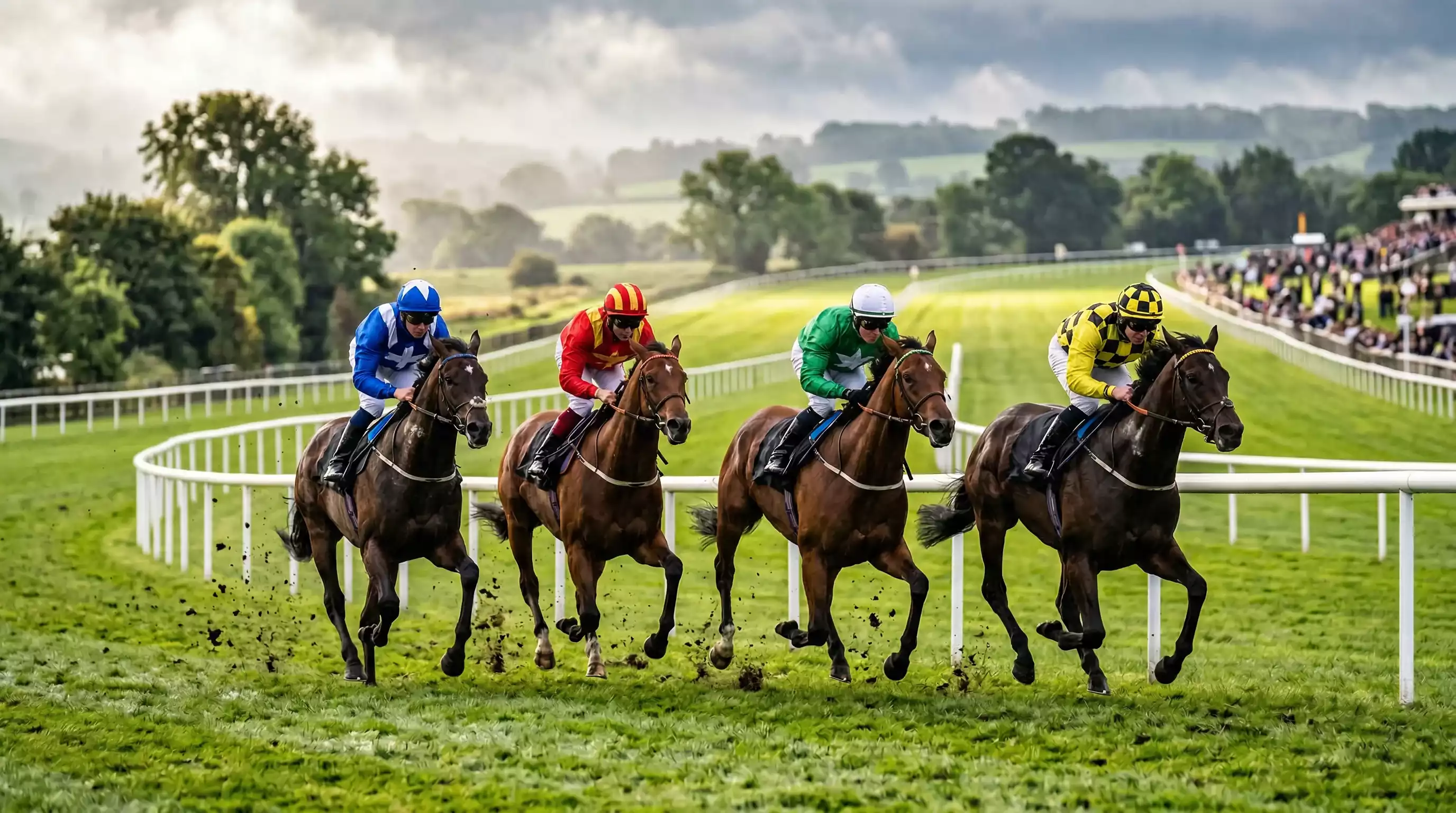
At six and seven furlongs, the picture shifts. These distances involve the first bend, and low draws gain a slight advantage from the inside rail. The tighter the field, the greater the effect — in small fields of six or fewer runners, the draw is essentially neutral. In larger handicaps, where runners are bunched entering the turn, an inside stall can save half a length or more. That half-length is rarely the difference between winning and losing on its own, but it can be the difference between a horse racing freely and one that gets shuffled back.
Over a mile and beyond, the draw influence fades considerably. The longer run to the first bend gives jockeys time to settle into position regardless of starting stall, and the two bends distribute the field more evenly. If you are betting on staying races at Southwell, your time is better spent studying pace maps and fitness indicators than worrying about stall numbers.
A practical approach: treat the draw as one input among several rather than a standalone factor. Weight it most heavily in large-field sprints, acknowledge it in 6f–7f races with double-figure runners, and largely ignore it at a mile-plus. And remember — the 2024 resurfacing means any draw data collected between the flood damage and the repair is unreliable. Clean post-resurfacing data is still accumulating, so treat current draw statistics as directional rather than definitive.
Distance-by-Distance Breakdown: 5f Sprints to 2m Staying Trips
Southwell offers a full range of flat distances from five furlongs to two miles, but not all distances race the same way — and the betting market does not always price that in correctly.
At five furlongs, the straight course rewards raw speed and clean breaks. Horses that miss the kick are almost never able to recover, because there is no bend to compress the field and create gaps. Front-runners and prominent racers dominate, and the market knows it — meaning value is scarce in backing pace horses, and slightly better when you identify a horse with a quick break speed that the market has overlooked due to a poor last run on a different track configuration.
Six-furlong races bend left shortly after the start, and pace horses still hold sway, but the tactical element increases. A horse that can sit second or third through the turn and kick off the bend has a viable route to victory, particularly in handicaps where the pace is likely to be strong. The key metric at 6f is sectional time around the bend — horses that maintain speed through the turn without being forced wide tend to outperform their starting prices.
At seven furlongs and a mile, the race becomes more tactical. The stalls are positioned further back, giving jockeys more time to find a position, and the two-turn layout favours runners with stamina reserves. Hold-up horses become competitive at these trips, and the front-runner advantage that defines the shorter distances diminishes significantly. If you back front-runners exclusively at a mile on Southwell's Tapeta, you will find your strike rate dropping noticeably compared to 5f and 6f.
Beyond a mile, the emphasis shifts to fitness and class. Southwell stages races up to two miles on the all-weather, and these contests tend to attract small fields of exposed horses. Market efficiency is generally higher in staying races — there are fewer runners, more exposed form, and less scope for the kind of market mispricing that smaller fields at sprint trips occasionally produce. The exception is staying handicaps with eight or more runners, where weight differentials and fitness gaps can open up genuine each-way value.
Favourite Strike Rates Across Race Classes at Southwell
The question every bettor at Southwell must answer is whether to back or oppose the favourite. Nationally, favourites win roughly a third of all flat races, and the strike rate has remained stable for years. At Southwell, the picture is more nuanced — and understanding why requires looking at field sizes and race classification rather than blanket statistics.
The BHA Racing Report 2025 recorded an average field size of 8.90 on the flat and 7.84 over jumps across all UK meetings. Those national averages mask a significant split: Premier fixtures averaged 11.02 runners per flat race, while Core fixtures — the tier where Southwell sits — averaged just 8.65. Smaller fields mechanically push the favourite's win rate higher, because there are fewer competitors and fewer unpredictable variables.
At Southwell specifically, low-grade handicaps with fields of eight or fewer often see the favourite win at a rate closer to 38-40%. That sounds attractive until you account for the prices — short-priced favourites in small fields generate minimal returns, and the long-term ROI of backing every favourite blindly at Southwell is negative, just as it is everywhere else. The edge comes in identifying when a favourite is underbet. A horse dropping in class from a Premier fixture to a Southwell Core meeting, for instance, may be priced at 5/2 when its true chance suggests it should be closer to 6/4 — because the market underrates how much weaker the opposition is at this level.
Conversely, opposing the favourite becomes a stronger play in larger-field handicaps (ten or more runners), where the form is more open and the market struggles to separate contenders. National Hunt races at Southwell show a lower favourite strike rate than the flat — small hurdle fields can be deceptive, because stamina deficits and jumping errors introduce more randomness than the market typically prices in.
The practical takeaway: do not bet on favourites as a system. Instead, use the favourite's price as a benchmark. If you think a horse should be shorter than the favourite but is not, that is your bet. If the favourite looks vulnerable based on draw, pace, or distance unsuitability, the value is in the place market or the second favourite, not in a heroic lay.
Front-Runner Advantage: Pace Bias on the Tapeta Surface
One of the persistent questions about Southwell is whether front-runners still hold a track advantage on Tapeta. On the old Fibresand, the answer was emphatic — the deep, holding surface sapped energy from closers, and horses who led from the front could dictate a rhythm that suited them. The switch to Tapeta softened this bias, but it did not erase it entirely.
Over five furlongs, front-runners continue to perform above the market expectation. The straight course eliminates the bend advantage that closers use on round tracks, and the quick Tapeta surface allows leaders to maintain a genuine gallop without the energy drain that Fibresand imposed. At six and seven furlongs, the advantage narrows. The turn creates bunching points where hold-up horses can save ground, and a pace-setter who goes too hard into the bend often ties up in the final furlong.
At a mile and beyond, the data suggests that the front-runner bias is largely neutralised. Two turns, a longer run-in, and the tactical awareness of experienced jockeys combine to reduce the positional advantage. In fact, in staying races, horses who race prominently but not on the lead — sitting second or third — show a stronger conversion rate than outright pace-setters. The sweet spot is a stalking position, close enough to pounce but not burning energy by dictating fractions.
For bettors, the actionable insight is not to back every front-runner at Southwell. It is to identify races where only one horse is likely to lead, at a distance where that advantage holds weight, and at a price that compensates for the times it does not work. A lone front-runner in a 5f or 6f race with no obvious pace rival is a bet worth considering. A front-runner in a mile handicap with two other speed horses for company is a likely casualty.
Distance-by-Distance Breakdown: 5f Sprints to 2m Staying Trips
Opening paragraph on distance variation at Southwell.
Paragraph on five-furlong sprint characteristics.
Paragraph on six-furlong tactical dynamics.
Paragraph on seven furlongs and mile trips.
Paragraph on staying races beyond a mile.
Favourite Strike Rates Across Race Classes at Southwell
Paragraph framing the favourite question at Southwell.
Paragraph on BHA field-size data and Premier vs Core split.
Paragraph on Southwell favourite win rates and ROI.
Paragraph on opposing favourites in larger fields.
Paragraph with practical takeaway on using the favourite as benchmark.
Front-Runner Advantage: Pace Bias on the Tapeta Surface
Paragraph on the Fibresand front-runner bias and Tapeta shift.
Paragraph on five-furlong and sprint performance.
Paragraph on mile-plus neutralisation of pace bias.
Paragraph with actionable insight on lone front-runners.
Leading Trainers at Southwell: Win Rates and Profit Angles
Trainer form at Southwell is one of the most reliable edges available to bettors, because the track's year-round scheduling creates genuine specialists. Unlike turf venues, where a trainer might have two or three runners over an entire season, Southwell's 79 fixtures generate large sample sizes — and large samples reveal patterns that hold up over time.
Mark Johnston — now Johnston Racing under the guidance of his son Charlie — has long been the yard most associated with Southwell success. With over 240 career winners at the track, the operation treats Southwell as a regular target rather than an afterthought. Johnston himself said it plainly when the Tapeta switch was announced: "Southwell is faultless in terms of scale and layout and, with a Tapeta surface, it can be an all-weather racetrack of the highest international standard," according to comments published in the Racing Post.
Beyond the Johnston operation, yards with strong Southwell records in the Tapeta era include Michael Appleby, whose proximity in the East Midlands makes the track a natural home fixture, and David Evans, who targets lower-grade handicaps with well-placed runners. The key metric is not just win count but win rate relative to market price — a trainer who wins at 18% but whose horses are consistently sent off at odds implying 25% probability is generating long-term profit for backers, even if the headline numbers look modest.
Trainers to approach with caution at Southwell include those based primarily in the South or South-West who make occasional raids without course form. The travel factor is not trivial — Southwell's Nottinghamshire location means a long journey for Lambourn or Newmarket runners, and the return on investment rarely justifies the logistics unless the trainer has a specific target in mind. When a big-name southern yard sends a single runner to a Southwell Tuesday, ask yourself why. Sometimes the answer is a well-handicapped horse on a clear mission. Often, it is a horse that needs a run and a venue where the trainer expects little scrutiny.
Jockey Performance Data: Who Rides Southwell Best?
Jockey selection at Southwell carries more weight than at many UK tracks, because the tight left-handed layout demands familiarity. Riders who know when to commit on the bends, where the best ground lies, and how the Tapeta surface plays in different conditions consistently outperform visitors who lack that tactical knowledge.
The riders who dominate Southwell tend to be based in the Midlands or the North and ride the track regularly. A jockey who has had 200 rides at Southwell in the Tapeta era has an ingrained sense of pace and positioning that cannot be replicated by a visitor with superior overall ability but limited local experience. This is not to say talent is irrelevant — obviously it matters — but at this level, the margins between competent riders are small, and course knowledge tips the balance.
What bettors should track is not just the jockey's win count at the track, but the win rate in combination with specific trainers. A jockey booked by a trainer who knows the track well is a double layer of course expertise. A jockey booked by an unfamiliar yard, riding a horse with no Southwell form, is a red flag. Watch the booking patterns over a season: when a trainer repeatedly books the same rider for Southwell, it is a signal that the combination works — and the market does not always adjust for that.
One underappreciated factor is the claiming jockeys. Southwell's all-weather cards frequently feature apprentice or conditional riders, and their weight claims can offset a lack of experience if the horse is well-suited to the track. A 5lb claim on a front-runner in a small-field sprint is a genuine advantage, because the race dynamics at Southwell reward early speed more than tactical finesse.
Trainer–Jockey Combinations That Pay
The most actionable edge in Southwell's trainer-jockey data lies not in individual statistics but in combinations. When a trainer who targets the track books a jockey who rides it well, the result is a partnership fine-tuned to Southwell's specific demands — and those partnerships tend to produce flat-stake profits that neither trainer nor jockey generates independently.
The methodology is straightforward: filter for trainer-jockey pairs with at least 20 rides together at Southwell since the Tapeta installation, then compare win rate against average starting price. If a combination wins at 22% while the market prices those horses at an implied 15%, you have a profitable angle — not for every individual race, but across a meaningful sample. The sample threshold matters. Ten rides is noise. Twenty begins to signal something real. Fifty is a pattern you can trust.
Track these combinations through a spreadsheet or staking log rather than relying on memory. Southwell's frequent scheduling means data accumulates quickly, and partnerships that were profitable last season may have shifted if a jockey changes riding style or a trainer adjusts their approach. The combinations that endure are the ones built on genuine tactical understanding of the track, not just statistical fluke.
Jockey Performance Data: Who Rides Southwell Best?
Paragraph on jockey familiarity with the track.
Paragraph on Midlands-based riders and course knowledge.
Paragraph on tracking jockey-trainer booking patterns.
Paragraph on the value of claiming jockeys.
Trainer-Jockey Combinations That Pay
Paragraph on combination analysis methodology.
Paragraph on sample thresholds and win rate vs SP comparison.
Paragraph on tracking combinations over time.
Southwell vs UK All-Weather Rivals: A Six-Track Comparison
Britain has six all-weather racecourses: Chelmsford City, Kempton Park, Lingfield Park, Newcastle, Southwell, and Wolverhampton. Each runs on a different surface or track configuration, and understanding where Southwell sits in this landscape is essential for bettors who follow runners across multiple AW venues.
All-Weather Form Translator
Will a horse's form at another AW track carry to Southwell? Score the transfer.
Southwell is Tapeta on a tight left-handed oval — sharp bends that reward nippy, prominently-ridden types. Form carries best from tracks that match on two things: surface and shape. Pick where the horse showed its form to see how well it travels.
Chelmsford and Kempton race on Polytrack, a surface that plays somewhat differently from Tapeta — Polytrack tends to ride slightly slower and produces a less pronounced front-runner advantage. Lingfield also uses Polytrack but has a distinctive downhill finish that changes the dynamics of staying races. Newcastle runs on Tapeta, making it the closest comparison to Southwell in surface terms, but its galloping, left-handed layout is significantly more spacious — Newcastle's wide turns suit big-striding gallopers, while Southwell's tighter bends reward nippy, agile types. Wolverhampton races on Tapeta as well, on a tight left-handed oval that is probably the track most analogous to Southwell in terms of sharpness and demands on horse and jockey.
For bettors, the practical question is whether form translates between tracks. The answer is conditional. A horse that handles Southwell's Tapeta well will often perform at Newcastle or Wolverhampton, because the surface feel is consistent across Tapeta tracks. But the track configuration creates differences: a horse that wins at Southwell over seven furlongs by racing prominently around the tight bends may not reproduce that at Newcastle, where the wider turns reduce the positional advantage. Conversely, a horse that stays on well at Lingfield's Polytrack may find Southwell's quicker surface too sharp for its running style.
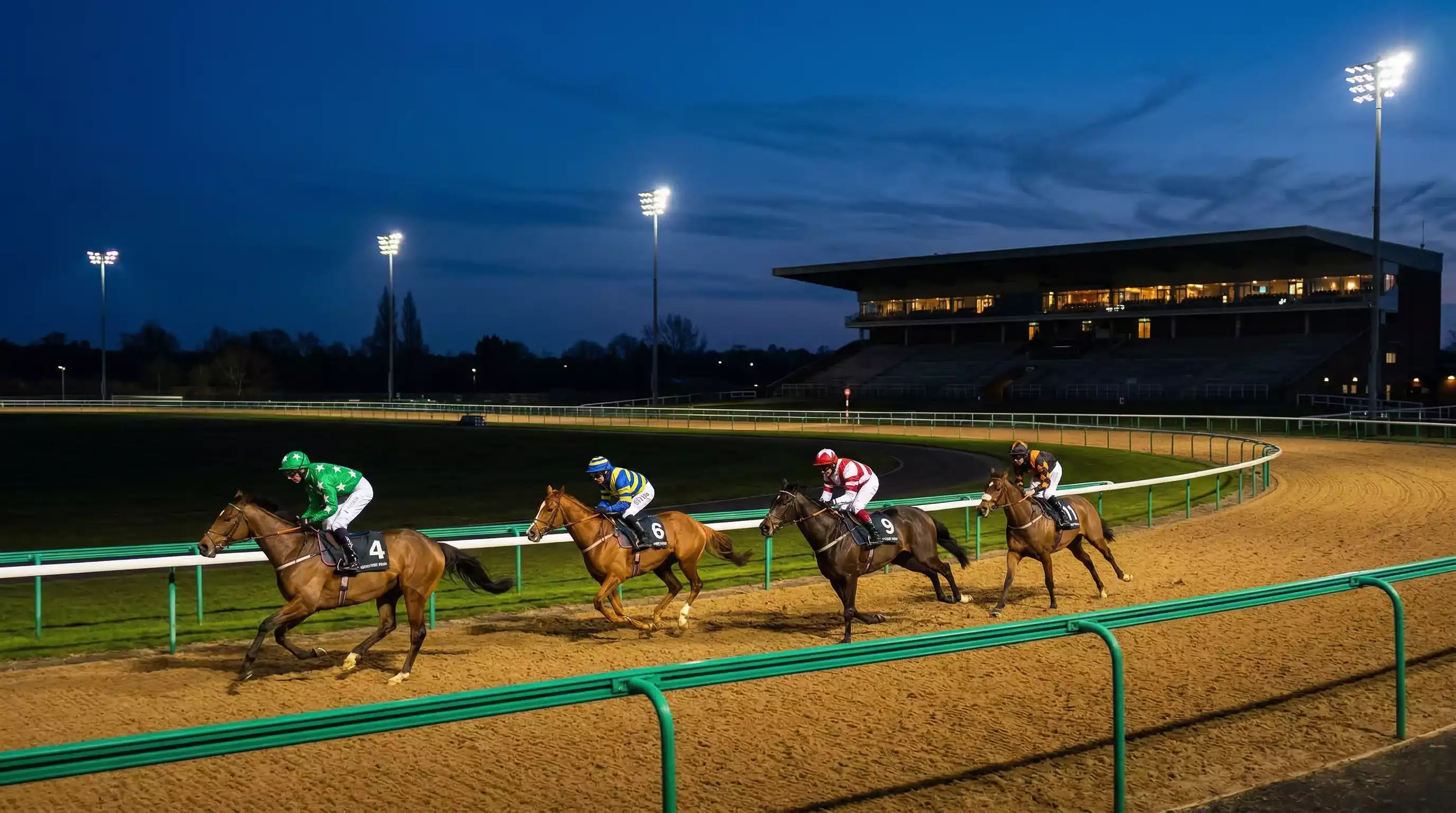
The BHA Racing Report 2025 noted that betting turnover per race on Premier fixtures grew by 1.1%, while turnover on Core fixtures — the category that covers Southwell and Wolverhampton — fell by 8.1%. That divergence in market interest creates an inefficiency: thinner markets at Core tracks mean the odds are set by smaller pools of money, and informed bettors with genuine data can find prices that do not accurately reflect a horse's chance. Southwell, as a high-volume Core venue, is one of the better places to exploit this.
The All-Weather Championships season, running from October through to April across all six tracks, provides the only structured competitive framework linking these venues. Southwell hosts qualifying races that feed into Finals Day, giving otherwise modest meetings an added competitive edge — and occasionally inflating fields beyond their usual Core-fixture levels.
Course Specialists: Horses With the Best Southwell Records
Course-and-distance form is the single most cited variable in horse racing analysis, and at Southwell it carries even more weight than usual. The track's unique characteristics — tight bends, Tapeta surface, compact oval — mean that some horses genuinely thrive here while struggling elsewhere. A horse with three wins from five starts at Southwell and a poor record at other AW tracks is not inconsistent. It is a course specialist, and the market frequently underprices that specificity.
Identifying course specialists requires patience rather than genius. Filter racecards for horses with two or more Southwell wins in the Tapeta era. Cross-reference with their record at other venues. If the performance gap is significant — winning at Southwell at a strike rate of 30% while managing 10% elsewhere — you have a horse whose ability is track-dependent. These runners are most valuable when they return to Southwell after a defeat at a different track, because the market often marks them down based on their last run without accounting for the venue change.
The risk with course specialists is staleness. A horse that has won three times at Southwell may have been raised in the handicap to a point where its track advantage no longer compensates for the weight. Always check the official rating relative to previous winning marks. If the horse is running off a mark 8lb or more above its last winning rating at the track, the specialist angle weakens considerably. Course form opens the door; the handicapper decides whether it stays open.
Winter Form vs Summer Jumps: Seasonal Patterns That Affect Betting
Southwell's racing calendar splits into two distinct phases, and the betting dynamics shift substantially between them. From October through April, the track runs its all-weather flat programme — the bread and butter of Southwell's schedule, with midweek afternoon cards, evening meetings under floodlights, and a steady diet of handicaps and low-grade classified stakes. From spring into autumn, the turf course takes over with National Hunt fixtures, offering a fundamentally different product to a different betting audience.
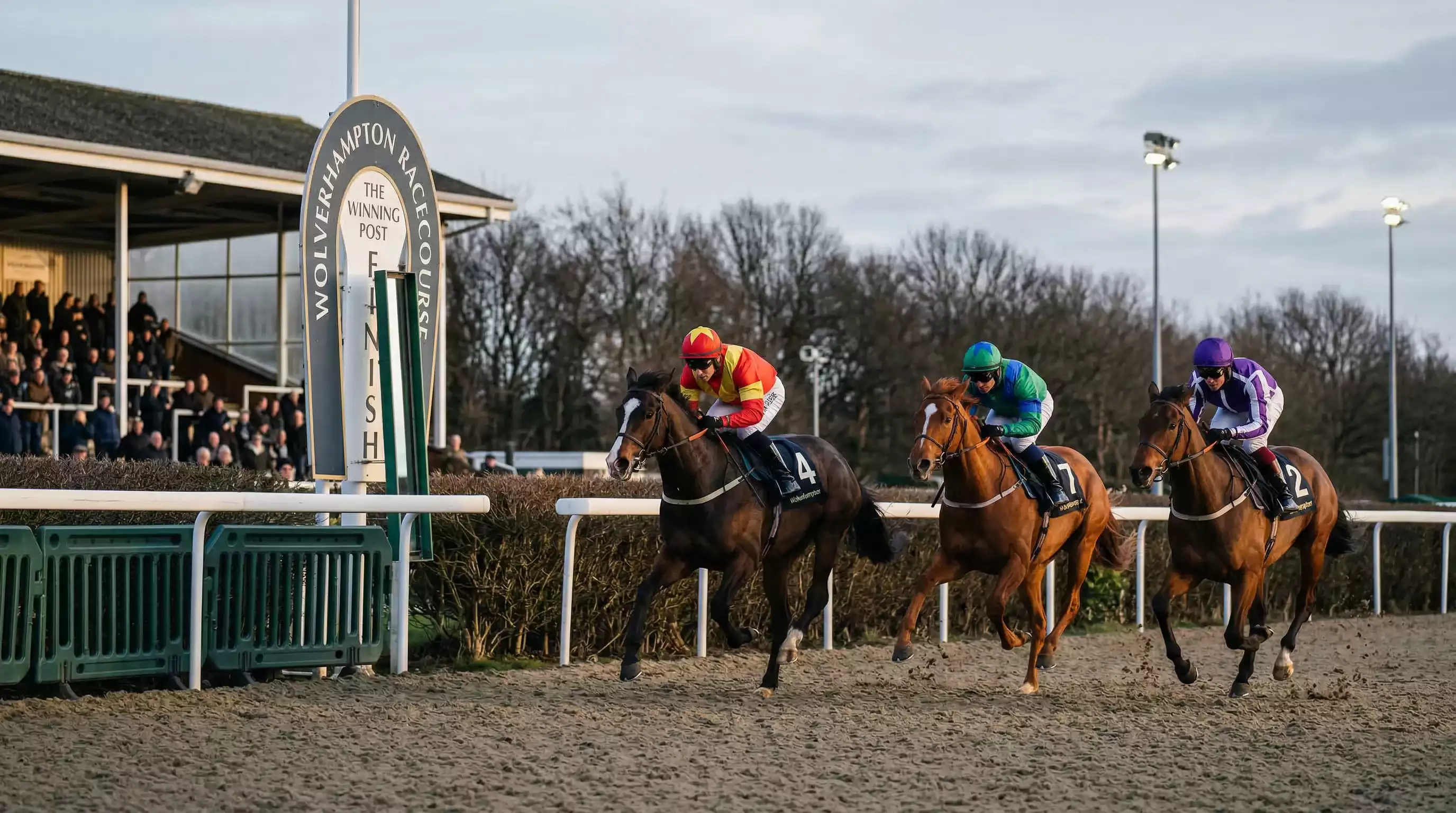
The seasonal shift matters because participation in horse racing betting itself is seasonal. Gambling Commission data from 2025 showed that 7% of UK adults had bet on horse racing in the April-to-July period, up from 4% in January-to-April — a 3 percentage-point swing that reflects the draw of the spring festivals and summer turf season. For Southwell bettors, this pattern creates an inverse opportunity. During the winter AW months, when casual bettors drift away from racing, the markets at Southwell are thinner and more influenced by a smaller pool of regular punters. That concentration can produce both sharper prices (when the market gets it right) and wider mispricings (when it does not).
The BHA has restructured its fixture classification for 2026, reducing Premier Racedays from 162 to just 52 across the entire calendar, according to the Thoroughbred Breeders' Association. That means more racing falls into the Core category, where Southwell already lives. The practical effect is a flatter fixture hierarchy — and for bettors, a wider pool of Core-level meetings to exploit the pricing inefficiencies that smaller fields and lower liquidity create.
For your staking, the seasonal pattern suggests a simple allocation principle: increase activity during the winter AW period when you have more data points, more fixtures, and thinner markets. Reduce exposure during the summer when Southwell switches to National Hunt on turf, a code with higher variance and less predictable form lines. This is not a rule to follow rigidly, but a structural awareness that should inform how you spread your annual betting budget.
Each-Way Value at Southwell: Where the Place Terms Work Hardest
Each-way betting at Southwell is a tool, not a system — and knowing when to use it is the difference between grinding out value and slowly leaking money to the bookmaker's overround. The mechanics are simple: you back a horse to win and to place, with the place portion paid at a fraction of the win odds (typically one-quarter or one-fifth, depending on the number of runners and the race type). The value lies in the gap between what the bookmaker offers and the horse's true probability of finishing in the places.
At Southwell, the sweet spot for each-way betting is handicap races with fields of ten to fourteen runners. In these fields, bookmakers typically pay four places at one-quarter the odds. A horse priced at 10/1 in a twelve-runner handicap gives you a place portion at 5/2 — and if your form analysis suggests that horse has a roughly 30% chance of finishing in the first four, the place bet alone is value. Fields smaller than eight runners reduce the place terms to two or three places, compressing the value margin. Fields larger than sixteen are rare at Southwell.
The trap is over-using each-way on short-priced runners. A horse at 3/1 each-way in a ten-runner race gives you a place return of just 3/4 — barely worth the stake if the horse only places. Each-way betting only generates genuine value when the win price is large enough to make the place portion meaningful. As a working threshold, consider each-way bets only when the win price is 6/1 or longer, and only in fields where four or more places are paid.
Southwell's Core-level racing produces a high proportion of competitive handicaps where eight to twelve runners with similar ratings go to post. These are the races where each-way punting works hardest, because the form is open, the market struggles to separate the principals, and a horse finishing third or fourth at double-digit odds still returns a profit on the place portion.
Handicap Races at Southwell: Reading the Weights
Handicaps form the backbone of Southwell's racing programme. The majority of all-weather flat cards at the track consist of handicap races, where each horse carries a weight determined by its official BHA rating — the aim being to give every runner a theoretically equal chance. In practice, the system is imperfect, and those imperfections are where betting value resides.
The first thing to understand is the rating bands. Southwell's Core-level handicaps typically attract horses rated between 45 and 75, a range that encompasses modest but genuine racehorses. Within that band, a horse rated 70 carrying top weight gives away significant poundage to a horse rated 50 at the bottom. The question is whether the ability gap justifies the weight gap. Often, at this level, it does not — lower-rated horses in decent form can outrun their marks precisely because the quality differential between a 50-rated and a 70-rated horse is narrower than the numbers suggest.
Horses dropping in class from Premier or higher-quality fixtures to Southwell Core handicaps deserve particular attention. A horse rated 68 that has been running in competitive Premier handicaps against 80-rated rivals may look outclassed on recent form — but drop it into a Southwell 0-70 handicap, and it faces fundamentally weaker opposition. The market sometimes prices these class-droppers too generously, because bettors anchor on the recent poor finishing positions without adjusting for the level of competition.
Weight is not the only variable. Recent wind operations, first-time application of headgear (blinkers, cheekpieces, tongue ties), and jockey bookings all interact with the handicap mark to shape a horse's chance. A well-handicapped horse with blinkers applied for the first time and a leading Southwell jockey booked is a multi-layered positive signal. One factor alone is noise. Two or three in combination become signal.
Ante-Post Markets and All-Weather Championship Routes
Ante-post betting — placing a wager before the final declarations are confirmed — is a niche within Southwell betting, but one that connects to a broader structure. The All-Weather Championships, which run from October through April across all six UK AW tracks, include qualifying races at Southwell that feed into Championship Finals Day. Horses accumulating points through these qualifiers can enter the Finals at attractive odds if identified early in the season.
The risk with ante-post markets is non-runners. If your selection does not declare for the race, the stake is lost — no refunds, no substitutions. At Southwell, where many runners are modest handicappers managed carefully by their trainers, late withdrawals are common. A horse might be entered for three consecutive meetings before actually running, and ante-post backers bear that uncertainty. The reward, when it works, is a price significantly better than what will be available on the day.
For Championship qualifiers specifically, ante-post value tends to emerge in the early-season meetings (October and November), when the market has not yet formed a clear view of which horses will target the Finals route. By January, the picture sharpens — leading contenders are identified, and prices contract accordingly. If you want to play the ante-post angle at Southwell, the autumn meetings offer the widest margins between early prices and eventual starting prices.
Handicap Races at Southwell: Reading the Weights
Paragraph on handicap race structure and BHA ratings.
Paragraph on rating bands and the value in lower-rated horses.
Paragraph on class-dropping runners from Premier fixtures.
Paragraph on headgear, wind ops, and multi-layered signals.
Ante-Post Markets and All-Weather Championship Routes
Paragraph on ante-post structure and AW Championship qualifiers.
Paragraph on non-runner risk at Southwell.
Paragraph on early-season ante-post value windows.
Bankroll Discipline for the All-Weather Calendar
Southwell betting, approached seriously, is a long-season commitment. With 79 fixtures spread across the year, the all-weather calendar offers a volume of betting opportunities that demands structure. Without bankroll discipline, the sheer frequency of racing turns a potential edge into a slow bleed — and the industry-wide data makes the stakes clear. Total online betting turnover on British horse racing stood at £8.73 billion in the 2023-2024 financial year, down 16.3% from the £10 billion recorded two years prior, according to Gambling Commission data analysed by Racing Post. That decline reflects a market where bettors are spending less but expecting more — a context that rewards careful allocation over speculative volume.
The foundation is simple: define a bankroll, and never bet outside it. A practical starting point is a dedicated fund equivalent to 50-100 individual stakes, where each stake represents 1-2% of the total. This structure means you can absorb a losing run of 20 or more bets — which will happen, even with a sound methodology — without depleting your capital. At Southwell, where you might find two or three bets per meeting across four meetings a week, a 100-point bankroll can sustain months of activity.

The Horserace Betting Levy Board reported a record Levy yield of £108.9 million in the 2024/25 financial year — the fourth consecutive year of increase. Alan Delmonte, HBLB Chief Executive, confirmed that this represented the highest collection since the Levy reforms of 2017. That growing Levy, even as turnover per race declines, reflects a market where fewer bettors are wagering more per head. For you, the takeaway is structural: you are competing against a concentrated pool of serious bettors, and surviving in that environment requires treating your bankroll as a business asset, not a leisure budget.
Review your results monthly. Track every bet — stake, odds, result, return — and calculate your actual ROI over rolling 100-bet samples. If you are profitable, increase stakes incrementally. If you are not, reduce stakes or step away entirely until you have identified why. The discipline is not glamorous, but it is the difference between betting at Southwell as a sustainable analytical exercise and betting at Southwell as an expensive hobby.
Frequently Asked Questions
Is there a draw bias at Southwell on the Tapeta surface?
The draw effect at Southwell on Tapeta is distance-dependent rather than uniform. Over five furlongs on the straight course, middle stalls hold a marginal advantage due to rail geometry. At six and seven furlongs, low draws benefit from the inside rail around the first bend, particularly in larger fields. At a mile and beyond, the draw is largely irrelevant — jockeys have enough time to settle into position regardless of starting stall. The 2024 resurfacing means post-repair data is still building, so treat current draw statistics as directional indicators rather than fixed rules.
What is the best strategy for betting on Southwell races?
The most effective Southwell betting strategy combines course-specific form analysis with disciplined staking. Focus on post-2021 Tapeta results only, prioritise trainer-jockey combinations with proven track records, and pay close attention to pace maps — particularly in sprints and six-furlong races where front-runners hold a measurable advantage. Each-way betting works well in handicaps with ten or more runners at prices of 6/1 or longer. Avoid blanket systems like backing every favourite, and treat every bet as a data decision rather than a hunch.
How does Southwell's Tapeta compare to other UK all-weather tracks?
Southwell shares its Tapeta surface with Newcastle and Wolverhampton, making form transfers between these three tracks more reliable than between Tapeta and Polytrack venues like Chelmsford, Kempton, and Lingfield. However, track configuration differs significantly: Southwell's tight left-handed oval favours nimble, prominently-ridden horses, while Newcastle's wider galloping layout suits long-striding types. Wolverhampton is the closest comparison in terms of sharpness. When assessing cross-track form, weight the surface match but adjust for the track geometry — a Southwell winner does not automatically replicate at Newcastle.
Sources and Methodology
The analysis in this guide draws on publicly available data from official racing and regulatory bodies. Industry-wide statistics on betting turnover, gross gambling yield, and participation rates come from the Gambling Commission's annual industry statistics for the 2024-2025 financial year. Field-size data, fixture classifications, and turnover-per-race figures are sourced from the BHA Racing Report 2025, which recorded average flat field sizes of 8.90 nationally and confirmed the divergence between Premier and Core fixtures in both field size and betting turnover.
Levy and prize money data is drawn from the HBLB Annual Report and Accounts 2024-2025, which reported that average betting turnover per race fell approximately 8% year-on-year. Attendance figures reference the Racecourse Association's published data showing over 5.03 million racecourse visitors in 2025 — the first time the five-million threshold was crossed since 2019.
Southwell-specific information, including fixture numbers, surface history, and course details, comes from the Southwell Racecourse official website and Arena Racing Company press releases. Tapeta surface safety data references material published by Tapeta Footings, citing the US Jockey Club Equine Injury Database. Race-level form analysis is based on post-December 2021 results — the period since the Tapeta installation — with the caveat that data from the period of flood damage in 2023 and prior to the 2024 resurfacing is treated with appropriate caution.
This guide does not use proprietary tipster databases, affiliate-driven content, or unverifiable form metrics. Where expert opinions are cited, they are attributed to named individuals with stated roles, and the original source is linked. All statistics are current as of early 2026; readers are encouraged to cross-reference with the latest BHA and Gambling Commission publications for the most recent figures.
